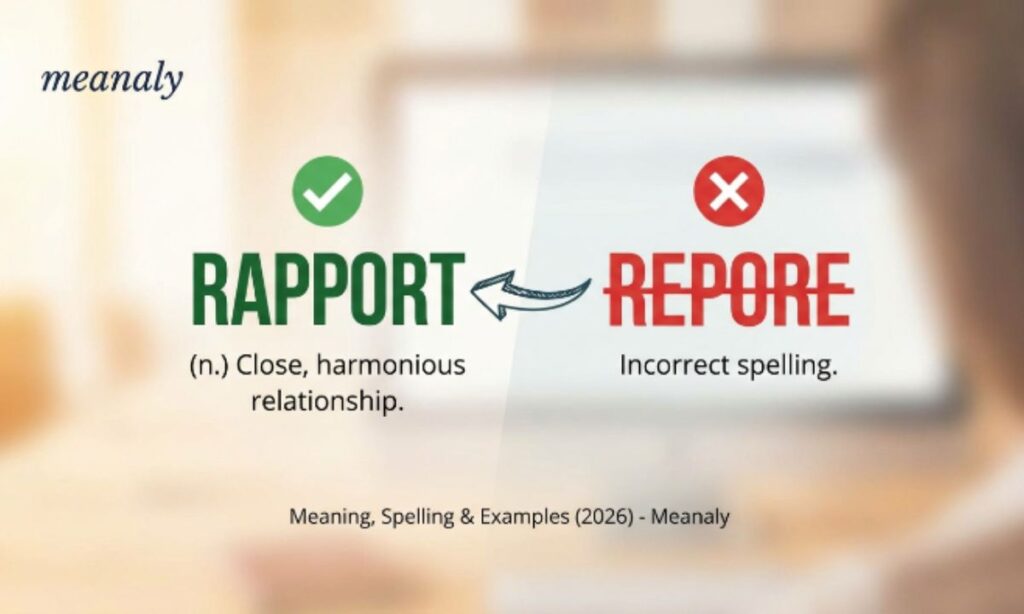
Typed “we need to build repore with clients” and had your spellchecker light up red? You’re not alone. Thousands of people search for rapport or repore every month because the word sounds nothing like how it’s spelled. That silent “t” at the end throws people off, and it’s easy to see why someone would guess “repore” instead.
This guide gives you the quick answer first, then breaks down where the word comes from, how it’s used across regions, common mistakes, and simple tricks to help the correct spelling finally stick – whether you’re writing an email, a resume, or a psychology essay.
Repore or Rapport – Quick Answer
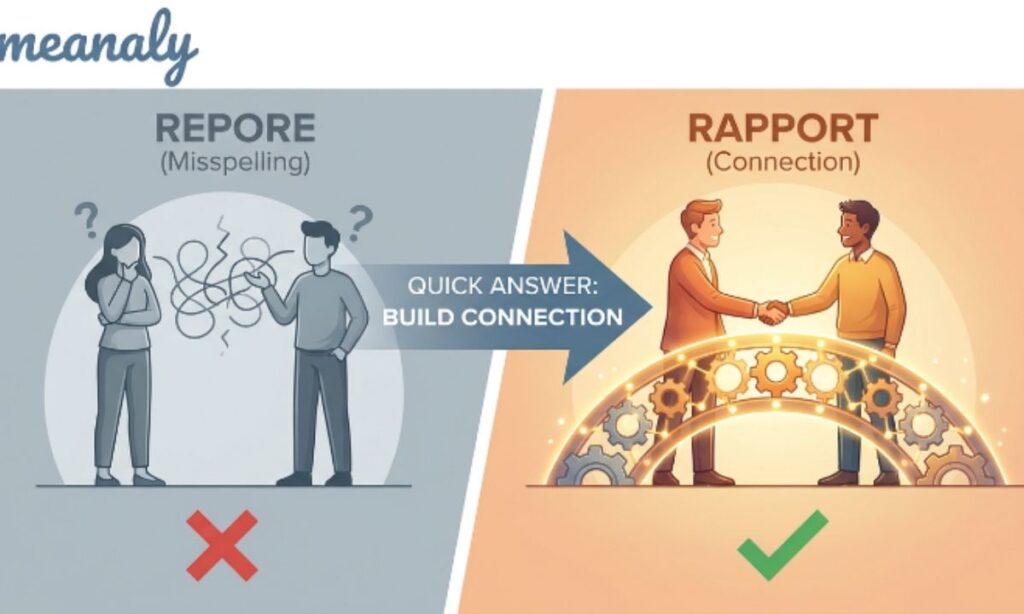
“Rapport” is correct. “Repore” is a misspelling.
- ✅ She built strong rapport with her clients.
- ❌ She built strong repore with her clients.
There’s no context – formal, casual, or professional – where “repore” is accepted.
The Origin of Repore or Rapport

Rapport comes from the French verb rapporter, meaning “to bring back” or “to relate something to something else.” English absorbed the word largely unchanged, keeping its silent final “t” – a pattern seen in other French loanwords too.
“Repore” has no such background. It isn’t borrowed from French, Latin, or any other language – it’s simply a phonetic guess, since the word sounds close to “ra-pour” when spoken aloud.
British English vs American English Spelling
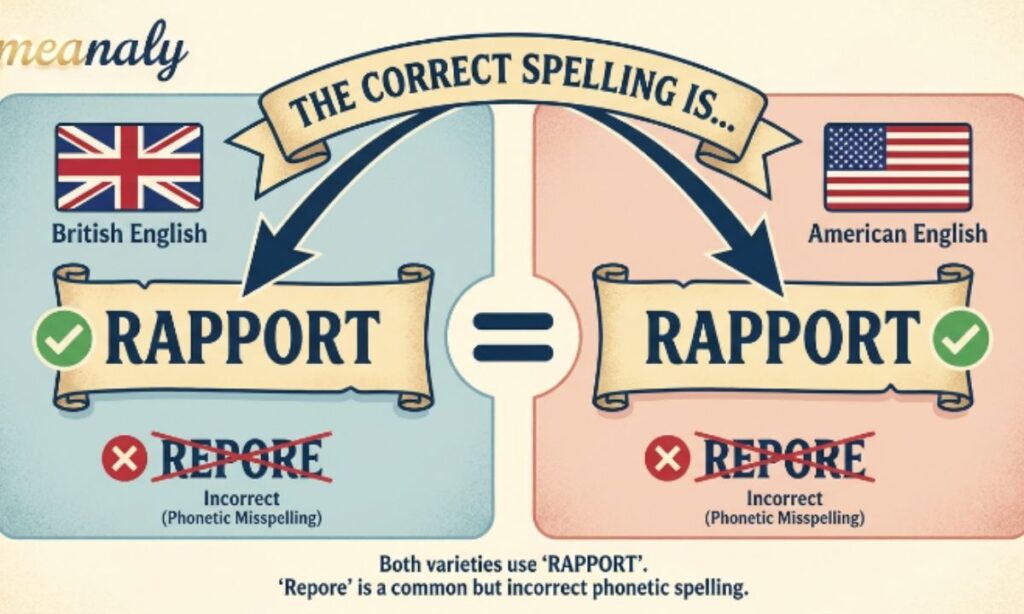
Unlike words such as color/colour or center/centre, this isn’t a regional spelling split.
| Region | Correct Spelling |
| British English | Rapport |
| American English | Rapport |
| Any other English variant | Rapport |
Both varieties use the same word, spelled the same way, with no accepted regional alternative.
Which Spelling Should You Use?
Always use “rapport.” A simple way to remember it:
- The word ends in a silent “t,” just like other French-origin words such as “ballet” or “buffet”
- Say it slowly and picture the French root – rapporter – to help the spelling stick
- The double “p” is part of the original French form, not a typing accident
Rapport or Repore meaning
Rapport means a close, positive, and comfortable relationship between people – built on trust, mutual understanding, and easy communication. You can have rapport with a friend, coworker, teacher, or client.
Rapport or Repore in relationship
In personal relationships, rapport describes that natural “click” between two people – a sense of ease, connection, and being understood without much effort. It’s often considered a foundation for trust and closeness.
Rapport or Repore Synonym
Common synonyms for rapport include:
- Connection
- Chemistry
- Affinity
- Understanding
- Harmony
Rapport or Repore Examples
- The teacher built great rapport with her students.
- Good rapport between coworkers improves teamwork.
- The therapist focused on establishing rapport early in treatment.
- Salespeople who build rapport tend to close more deals.
- Their rapport made the interview feel like a relaxed conversation.
Rapport Pronunciation
Rapport is pronounced ruh-POR (/ræˈpɔːr/), with the stress on the second syllable. The final “t” stays silent, which is exactly why so many people try to spell it as “repore.”
Rapport or Repore in business
In business settings, rapport plays a key role in sales, leadership, negotiation, and customer service. Professionals who build rapport quickly tend to earn trust faster, which often leads to smoother communication and stronger long-term relationships.
Common Mistakes with Repore or Rapport

- Spelling it phonetically as “repore,” “repoire,” or “rapor”
- Dropping one of the “p”s: “raport”
- Confusing it with the unrelated word “pore” (a small opening in skin)
- Assuming spellcheck will always catch it, especially in casual texting apps
Repore or Rapport in Everyday Examples

- We quickly built rapport during the first meeting.
- Her rapport with patients makes her a great nurse.
- Building rapport takes time, patience, and genuine interest in others.
- The manager’s rapport with the team boosted morale.
- Good rapport is the foundation of strong customer relationships.
Repore or Rapport – Google Trends & Usage Data
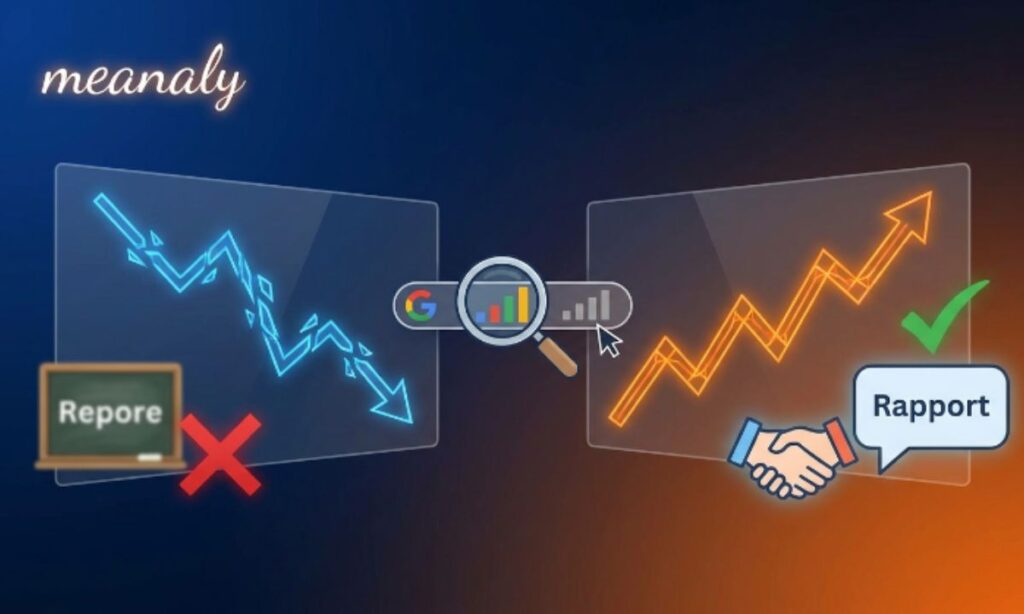
Search interest in “repore or rapport” stays consistently high, driven mostly by professionals writing emails, students working on psychology or communication assignments, and customer service teams researching relationship-building skills.
Despite frequent searches for “repore,” it has never appeared as an accepted spelling in any major English dictionary.
Comparison Table: Keyword Variations

| Variation | Correct? |
| Rapport | ✅ Yes |
| Repore | ❌ No |
| Repoire | ❌ No |
| Rapor | ❌ No |
| Raport | ❌ No |
| Rappor | ❌ No |
Conclusion
The rule here is simple and permanent: it’s always “rapport,” never “repore.” The word’s French origin explains both the double “p” and the silent final “t,” and that spelling doesn’t change across regions or writing styles.
Once that detail clicks, you’ll spell it correctly every time – in emails, essays, and everyday conversations about connection and trust.
Frequently Asked Questions
What is the correct spelling, rapport or repore?
“Rapport” is correct; “repore” is a common misspelling based on how the word sounds.
Why is rapport spelled with two Rs and a silent T?
It comes from the French verb rapporter, and English kept the original double “p” and silent “t” when it adopted the word.
Is repore a real English word?
No, “repore” doesn’t appear in any standard English dictionary – it’s simply a phonetic misspelling of “rapport.”
How do you pronounce rapport correctly?
Rapport is pronounced “ruh-POR,” with a silent “t” at the end.
What does rapport mean in a relationship?
It means a close, trusting, and comfortable connection where people understand each other easily.
Where does the word rapport come from?
It comes from the French verb rapporter, meaning “to bring back” or “to relate.”
How do you build rapport with someone?
Active listening, genuine interest, eye contact, and finding shared experiences all help build rapport naturally.

Hi , I’m a language researcher and content writer with 6+ years of experience in word meanings, slang, abbreviations, and internet terminology. He writes clear, accurate, and easy-to-understand articles to help readers quickly find reliable definitions and understand modern language with confidence.