

Texted “you’re my homey” and then second-guessed whether it should’ve been “homie”? You’re not alone. This homey or homie mix-up trips up a lot of people, because the two words look nearly identical, sound almost the same out loud, and both trace back to the idea of “home” ; but they mean genuinely different things once you dig into them.
The confusion usually comes down to one thing: people assume these are just two spellings of the same word, when really they serve completely different jobs in a sentence. This guide breaks the homey or homie confusion down for good ; the quick answer, where each word comes from, how they’re used differently, and simple ways to remember which one fits your sentence.
Homey or Homie : Quick Answer

“Homie” refers to a close friend. “Homey” describes something cozy, warm, or comfortable.
- ✅ That’s my homie from college.
- ✅ Her apartment has such a homey feel.
Both spellings are valid English words ; the difference is entirely about meaning, not correctness.
Is it homie or homey ?
It depends on what you’re trying to say. If you’re talking about a person ; a close friend ; use “homie.” If you’re describing a place or feeling that’s warm and welcoming, use “homey.”
Some casual speech does use “homey” informally to mean friend too, but “homie” is the more standard slang spelling for that meaning.
What Does Homey Mean?

“Homey” is an adjective meaning cozy, warm, and comfortable ; reminiscent of the feeling of home.
- The cabin has such a homey atmosphere.
- This café feels really homey.
What Does Homie Mean?
“Homie” is a noun, used as slang for a close friend, buddy, or someone from your neighborhood or community.
- That’s my homie from high school.
- I’m hanging out with my homies tonight.
The Origin of Homey or Homie

“Homie” grew out of African American Vernacular English (AAVE), shortened from “homeboy” or “homegirl” ; originally referring to someone from the same hometown or neighborhood before broadening into general slang for a close friend.
“Homey,” by contrast, isn’t rooted in any particular vernacular — it developed simply as an adjective form of “home,” used to describe comfort and familiarity.
How Do You Spell Homely?
“Homely” is a separate word from both “homey” and “homie,” and its meaning actually shifts depending on region:
| Region | Meaning of “Homely” |
| British English | Cozy, warm, comfortable — similar to “homey” |
| American English | Plain, simple, or unattractive (a polite way to describe someone’s appearance) |
This regional split makes “homely” one to use carefully, especially when writing for an international audience.
Definition Of Homey
As a formal dictionary definition, “homey” means: having a feeling of home; comfortable, cozy, and familiar. It’s most often used to describe interiors, atmospheres, or a general sense of welcome.
Homey Person Meaning
When applied to a person rather than a place, “homey” can describe someone with a warm, down-to-earth, welcoming personality ; someone who makes others feel comfortable, much like a cozy home does.
Is Homey A Wordle Word ?
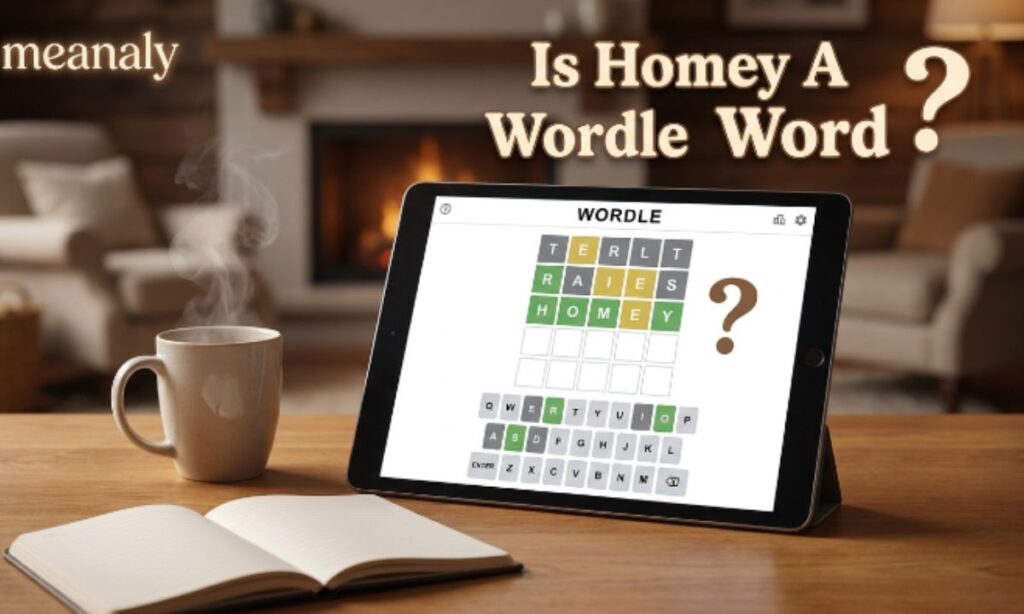
Yes ; “homey” is a valid five-letter English word and would be accepted in word games like Wordle, since it appears in standard English dictionaries.
Homey Or Homie In English
In standard English usage, both words exist and are recognized, but they serve different grammatical roles: “homey” functions as an adjective, while “homie” functions as a noun referring to a person.
Homey Meaning Friend
While “homie” is the more common and recognized slang term for a friend, “homey” is sometimes used interchangeably in very casual speech to mean the same thing ; though this usage is less standard and can cause confusion, since “homey” more commonly describes comfort rather than a person.
Homey Or Homely
Don’t confuse “homey” with “homely” ; they aren’t interchangeable in American English. “Homey” is a positive, cozy descriptor; “homely” in the U.S. often carries a negative connotation related to plain appearance, while in British English it’s closer in meaning to “homey.”
Homey Feeling Meaning
A “homey feeling” refers to a sense of comfort, familiarity, and warmth ; the emotional experience of feeling safe and at ease, similar to how one feels at home.
Homie Meaning In Love
In romantic or close relationship contexts, calling someone your “homie” can signal deep platonic closeness and trust — treating a partner or close companion like family, rather than implying anything romantic on its own.
British English vs American English Usage

| Term | British English | American English |
| Homey | Used for cozy/comfortable | Used for cozy/comfortable |
| Homie | Less common, understood as US slang | Common slang for “friend” |
| Homely | Means cozy, warm | Means plain or unattractive |
The clearest regional distinction lies with “homely,” not “homey” or “homie,” which are used fairly consistently across both varieties of English.
Which One Should You Use?
- Use “homie” when referring to a person ; a friend, companion, or someone close to you.
- Use “homey” when describing a place, feeling, or atmosphere that’s warm and comfortable.
- Avoid “homely” unless you’re certain of your audience’s regional understanding of the word.
Common Mistakes with Homey or Homie
- Using “homey” when referring to a friend in formal or unclear contexts
- Confusing “homey” with “homely,” especially across British vs American audiences
- Assuming both words are simply alternate spellings of the same term
- Using either word in professional or formal writing, where both read as too casual
Homey or Homie in Everyday Examples

- That’s my homie from the old neighborhood.
- I’ve known my homies since middle school.
- This coffee shop has such a homey vibe.
- Her grandma’s kitchen always felt so homey.
- We’ve been homies since freshman year.
Homey or Homie : Google Trends & Usage Data
Search interest in “homey vs homie” stays consistent, driven mostly by people checking usage before texting, writing captions, or creating content, since both words sound identical but serve very different purposes.
This falls into the informational search category ; most searchers already suspect a difference exists and simply want clarity before using either word.
Comparison Table: Homey vs Homie
| Feature | Homey | Homie |
| Part of speech | Adjective | Noun |
| Meaning | Cozy, warm, comfortable | Close friend |
| Refers to | Places, feelings, atmosphere | People |
| Origin | Derived from “home” | Derived from “homeboy” (AAVE) |
| Formality | Neutral to semi-formal | Informal, slang |
| Common use | Interior design, hospitality, writing | Casual conversation, social media |
Conclusion
The homey or homie debate comes down to one simple rule once it clicks: homey describes comfort, homie describes friendship. One word talks about places and feelings; the other talks about people.
So the next time you’re stuck between homey or homie, just ask what you’re describing. If it’s a person, go with “homie.” If it’s a place, mood, or feeling, “homey” is your word. Keep that distinction in mind ; places are homey, people are homies ; and you’ll never mix the two up again.
Frequently Asked Questions
What is the difference between homey and homie?
“Homey” describes a cozy, comfortable feeling, while “homie” is slang for a close friend.
What does homie mean in slang?
“Homie” is casual slang for a close friend or someone from your neighborhood or crew.
What does homey mean as an adjective?
As an adjective, “homey” means cozy, warm, and comfortable, like a welcoming home.
Is homie a real word in the dictionary?
Yes, “homie” is recognized in modern dictionaries as slang for a close friend.
Can homey also mean a friend like homie?
Yes, in some casual contexts “homey” is used informally to mean the same thing as “homie.”
How do you spell homie correctly?
The correct slang spelling is “homie,” though “homey” is also accepted as an alternate spelling.
Which spelling is more common, homey or homie?
“Homie” is more common in slang contexts, while “homey” is more common when describing comfort or coziness.

Hi , I’m a language researcher and content writer with 6+ years of experience in word meanings, slang, abbreviations, and internet terminology. He writes clear, accurate, and easy-to-understand articles to help readers quickly find reliable definitions and understand modern language with confidence.