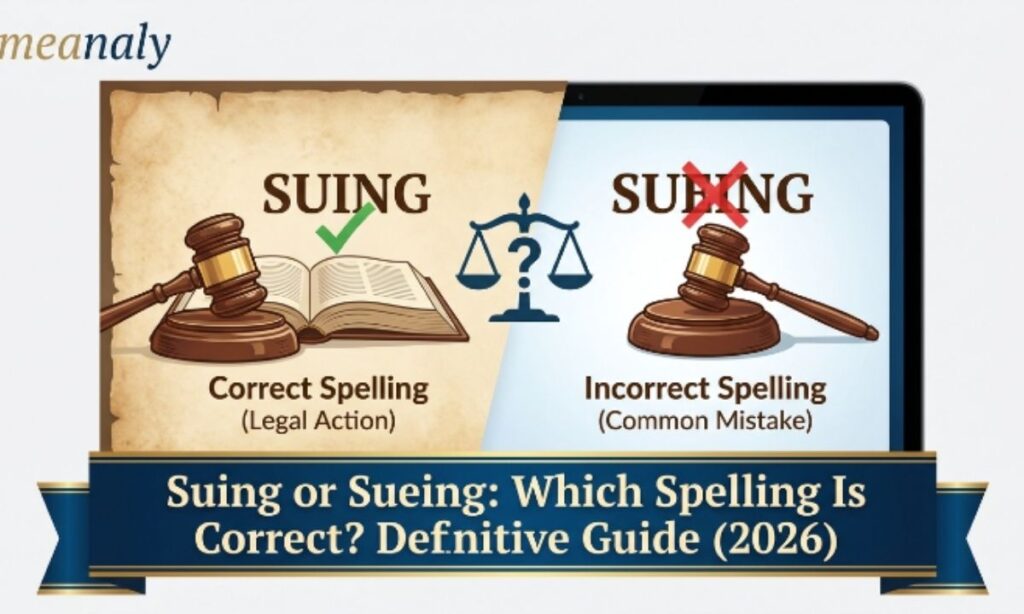
Paused mid-sentence, unsure whether to write “suing” or “sueing”? You’re not alone. This is one of the most common spelling mixups in legal and everyday writing, and it trips up students, professionals, and even confident writers. The base word “sue” ends in a silent “e,” which makes “sueing” feel like the logical choice ; but English spelling rules say otherwise.
This guide gives you the quick answer right away, then breaks down the word’s origin, pronunciation, legal meaning, and simple tricks to help the correct spelling stick for good.
Suing or Sueing : Quick Answer
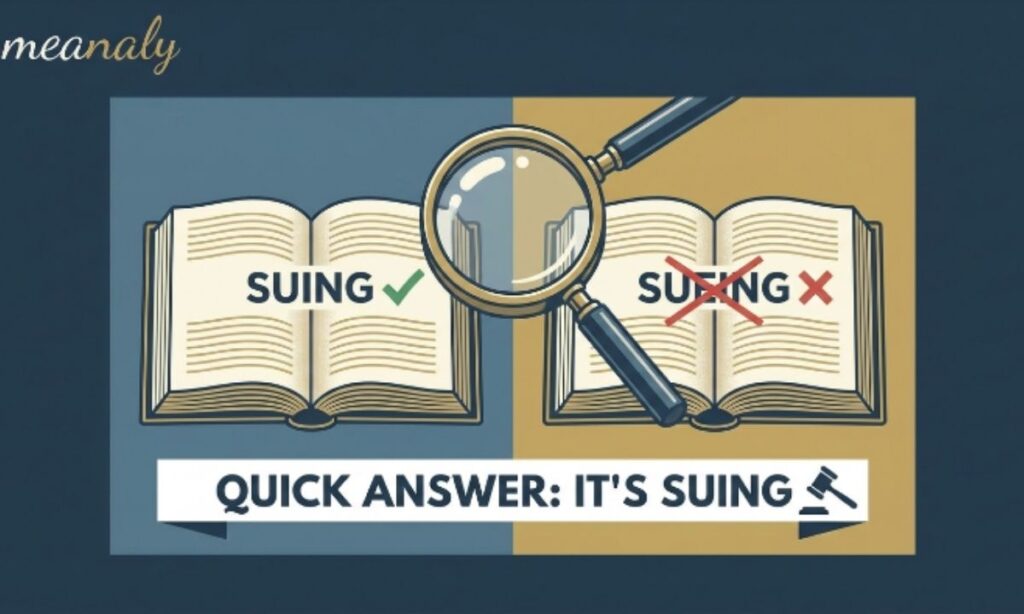
“Suing” is correct. “Sueing” is a misspelling.
- ✅ She is suing the company for damages.
- ❌ She is sueing the company for damages.
There’s no context ; legal, formal, or casual ; where “sueing” is accepted.
The Origin of Suing or Sueing
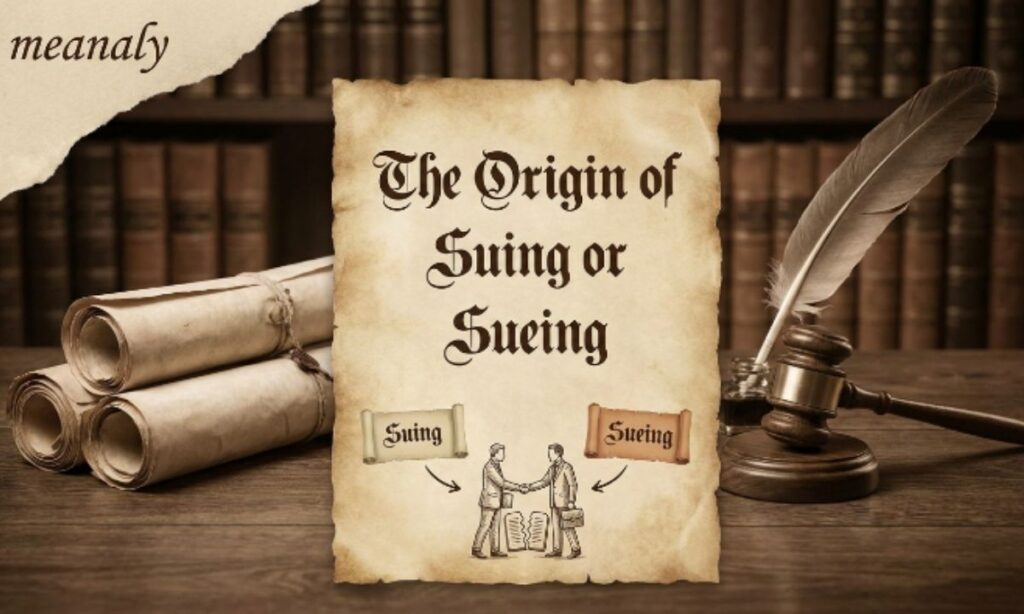
The verb “sue” entered English through Old French suer, tracing back to the Latin root sequi, meaning “to follow” or “to pursue.” Over time, it developed its modern legal meaning: pursuing a claim or remedy through a court process.
When forming the present participle, English follows a standard rule ; drop the final silent “e” before adding “-ing.” That’s exactly what happens here: “sue” becomes “suing,” not “sueing.” The mistake isn’t about history or regional spelling ; it’s simply a case of the spelling rule not feeling intuitive at first glance.
Is It Sueing Or Suing?
To settle it directly: it’s always “suing.” “Sueing” has never been accepted as a standard variant in any major English dictionary, regardless of how logical it might look next to the base word “sue.”
Suing Or Sueing Synonym
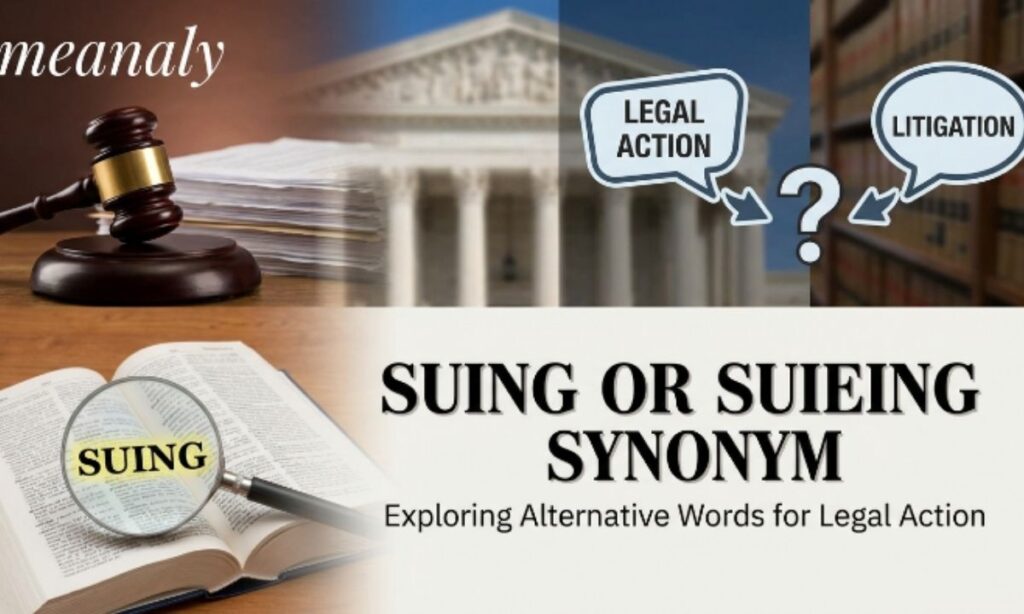
Common synonyms and related phrases for “suing” include:
- Taking legal action
- Filing a lawsuit
- Bringing a suit against
- Taking to court
- Pursuing a claim
Suing Or Sueing In A Sentence
- She is suing her former employer for wrongful termination.
- The company began suing several competitors over patent infringement.
- They discussed suing the landlord over unsafe living conditions.
- He considered suing after the accident.
Suing Pronunciation
“Suing” is pronounced SOO-ing (/ˈsuːɪŋ/). The long “oo” sound already comes from the base word “sue,” which is exactly why no extra “e” is needed to preserve the pronunciation ; the written rule and the spoken sound line up perfectly.
Suing Meaning In Law
In legal terms, “suing” means initiating a lawsuit or legal proceeding against a person, company, or institution, typically to seek compensation, damages, or another form of legal remedy. It’s the ongoing or present-tense action of the verb “to sue.”
Sue Abbreviation Meaning
“Sue” isn’t an abbreviation ; it’s a standalone verb in its own right, meaning to bring legal action against someone.
It’s sometimes confused with the given name “Sue,” but in legal and grammatical contexts, it always refers to the act of pursuing a claim through the courts.
British English vs American English Spelling
Some assume this might be a British-vs-American spelling difference, similar to color/colour. It isn’t.
| Region | Correct Spelling |
| British English | Suing |
| American English | Suing |
| Any other English variant | Suing |
There is no regional exception here ; “suing” is the only accepted spelling worldwide.
Which Spelling Should You Use?
Always use “suing.” A simple way to remember the rule:
- Verbs ending in a silent “e” ; like “make,” “write,” or “sue” ; drop that “e” before adding “-ing”: making, writing, suing.
- If the rule works for other silent-e verbs, it works for “sue” too.
Common Mistakes with Suing or Sueing
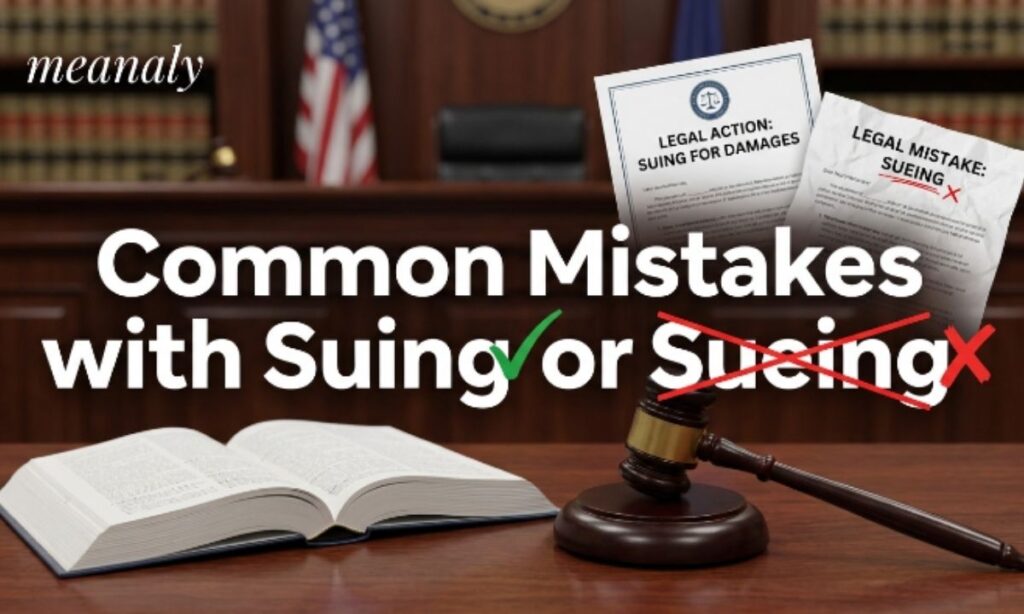
- Keeping the “e” out of habit: writing “sueing” instead of “suing“
- Assuming the pronunciation requires an extra “e” to stay clear
- Confusing “suing” with “sewing” (using thread and a needle) due to similar spelling
- Trusting the mistake because it “looks logical” next to the base word “sue”
Suing or Sueing in Everyday Examples
- The customer is suing the manufacturer over a faulty product.
- Doctors often discuss the risks of suing in medical malpractice cases.
- She’s suing for breach of contract.
- They’re suing the city after the incident.
- The firm is suing on behalf of several affected employees.
Suing or Sueing : Google Trends & Usage Data
Search interest in “suing or sueing” stays fairly consistent, driven mostly by writers, students, and professionals double-checking their spelling before sending emails, drafting contracts, or publishing content.
Despite the frequent searches, “sueing” has never gained acceptance in dictionaries or style guides ; usage data consistently confirms “suing” as the only standard form.
Keyword Comparison Table
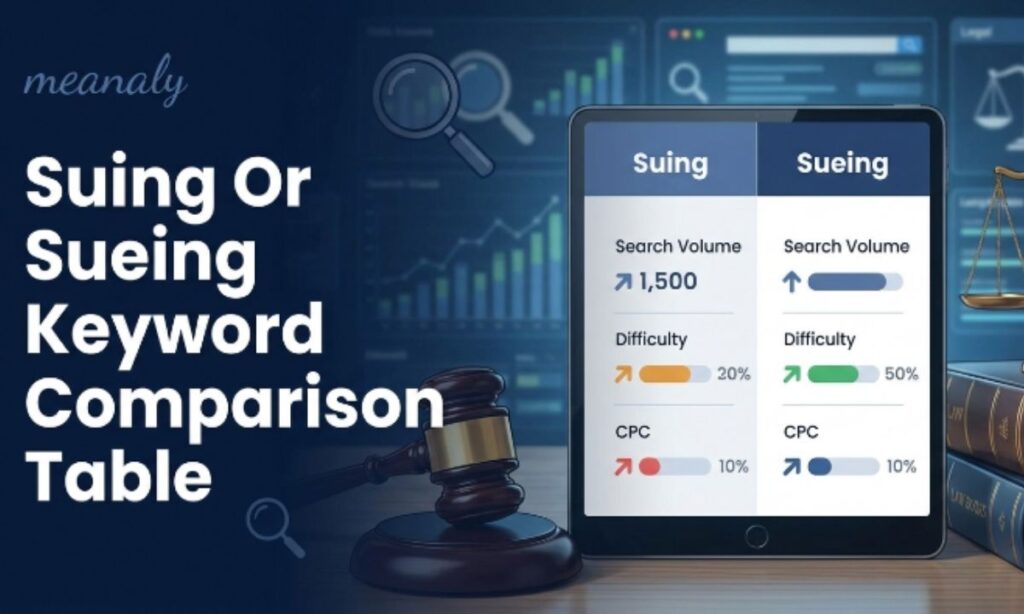
| Feature | Suing | Sueing |
| Correct spelling | ✅ Yes | ❌ No |
| Found in dictionaries | ✅ Yes | ❌ No |
| Used in British English | ✅ Yes | ❌ No |
| Used in American English | ✅ Yes | ❌ No |
| Common spelling mistake | — | ✅ Yes |
Last Words
The rule here is short and permanent: it’s always “suing,” never “sueing.” The silent “e” in “sue” drops before “-ing,” following the same pattern as countless other English verbs.
Once that detail clicks, you’ll spell it correctly every time; in emails, legal documents, or everyday writing.
Frequently Asked Questions
What is the correct spelling, suing or sueing?
“Suing” is the correct spelling; “sueing” is a common misspelling.
Why is sue spelled suing and not sueing?
The “e” in “sue” is dropped before adding “-ing,” following a standard English spelling rule.
Is sueing a real word in English?
No, “sueing” is not a recognized word in any English dictionary ; it’s simply a misspelling of “suing.”
How do you spell the present participle of sue?
The present participle of “sue” is spelled S-U-I-N-G.
What does suing mean in legal terms?
Suing means taking legal action against someone, usually by filing a lawsuit in court.
Is there a difference between suing and sueing in British and American English?
No, “suing” is the only correct spelling in both British and American English.
What is an easy way to remember suing spelling?
Remember that words ending in a silent “e,” like “sue,” usually drop the “e” before adding “-ing.”

Hi , I’m a language researcher and content writer with 6+ years of experience in word meanings, slang, abbreviations, and internet terminology. He writes clear, accurate, and easy-to-understand articles to help readers quickly find reliable definitions and understand modern language with confidence.