Paused mid-sentence, unsure whether to write “nineth” or “ninth”? You’re definitely not the only one. Since “five” becomes “fifth” and “twelve” becomes “twelfth,” it feels logical to assume “nine” simply becomes “nineth.” But English doesn’t follow that pattern here, and this small mismatch trips up students, non-native speakers, and even confident writers.
This guide gives you the quick answer right away, then breaks down where the word comes from, how British and American English handle it, common mistakes, and simple tricks to make the correct spelling stick for good.
Nineth or Ninth : Quick Answer
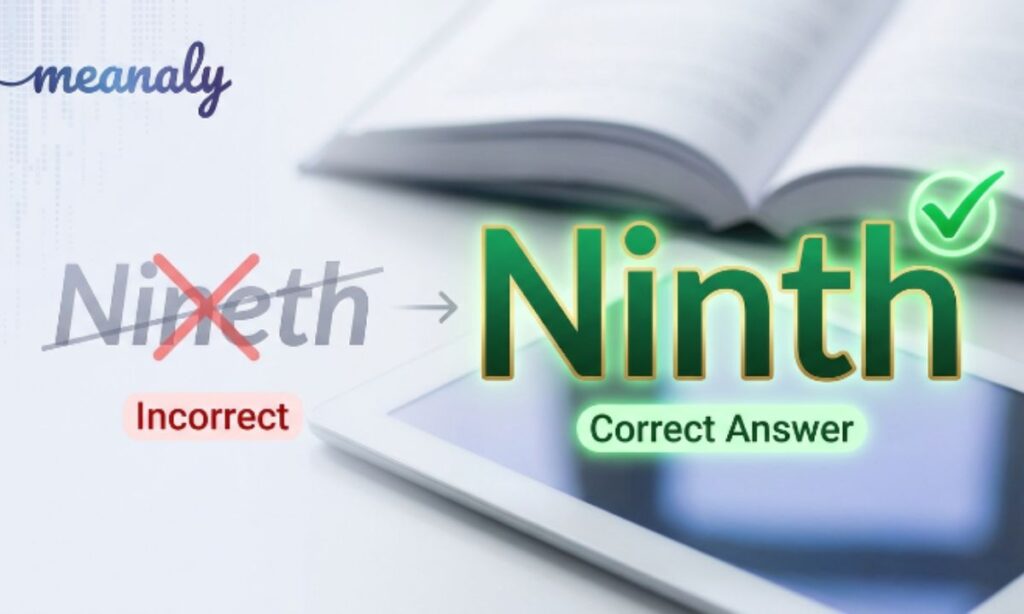
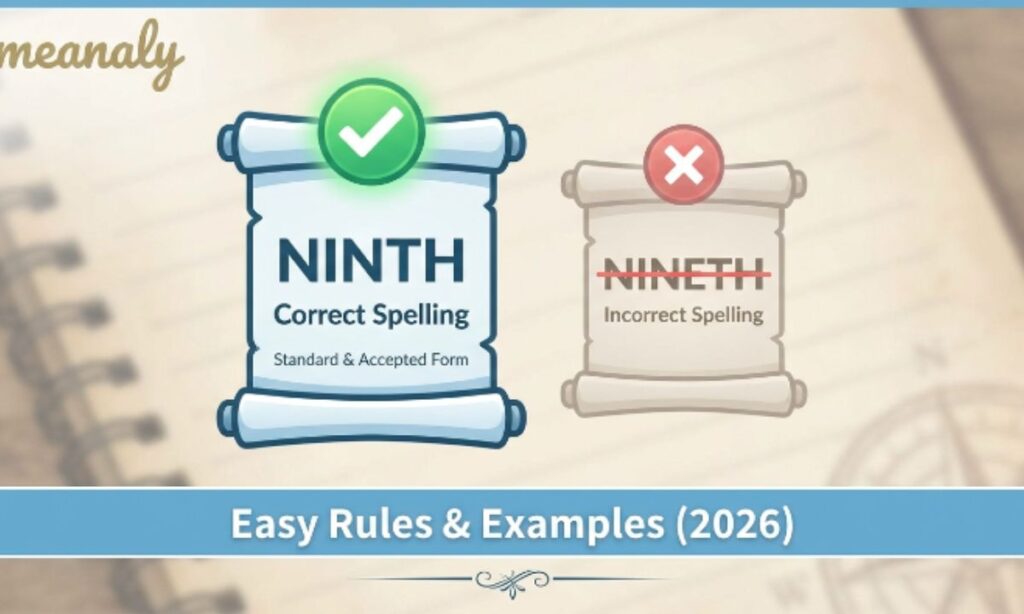
“Ninth” is correct. “Nineth” is a misspelling.
- ✅ She finished in ninth place.
- ❌ She finished in nineth place.
There’s no context : formal, casual, or regional : where “nineth” is accepted.
The Origin of Nineth or Ninth
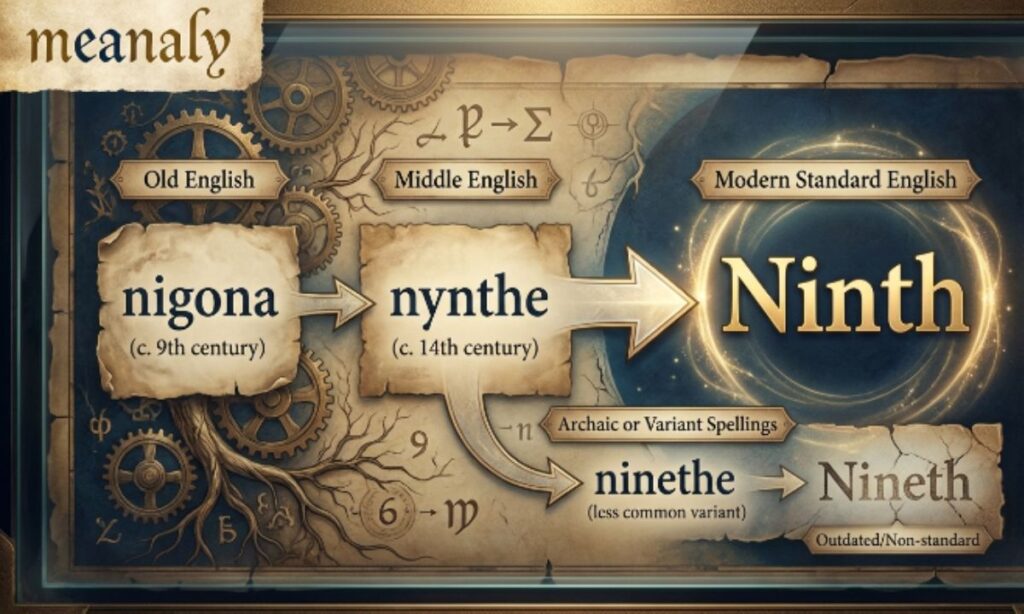
The word “ninth” comes from Old English nigoða, which gradually shifted into “ninthe” and then settled as “ninth.” Over time, English simplified both the spelling and the pronunciation, and the final “e” in “nine” was dropped to make the word smoother to say : which is exactly why “nineth” never became the standard form, even though it looks like the more logical choice.
British English vs American English Spelling

Some assume this might be a British-vs-American spelling split, similar to color/colour. It isn’t.
| Region | Correct Spelling |
|---|---|
| British English | Ninth |
| American English | Ninth |
| Any other English variant | Ninth |
There is no difference between British and American English for this word : unlike pairs such as color/colour or center/centre, this spelling stays the same worldwide.
Which Spelling Should You Use?
Always use “ninth.” Simple rule to remember it:
- Drop the “e” in “nine” and add “th” → ninth
- This isn’t unique to nine : English does the same thing with other ordinal numbers, like “five” → “fifth” and “twelve” → “twelfth”
Spell 9th
Written out as a word, “9th” becomes N-I-N-T-H. It’s used the same way whether you’re writing a date, a rank, or a fraction:
- The 9th of April → the ninth of April
- Finished 9th in the race → finished ninth in the race
Nineth or Ninth day
When referring to a specific day in a sequence : a wedding anniversary, a countdown, or a calendar date — the correct form is always “ninth day,” never “nineth day.”
- Today marks the ninth day of the challenge.
Nineth or Ninth in English
In standard English, only “ninth” is recognized as correct. “Nineth” is a spelling error that doesn’t appear in any English dictionary, in any dialect.
Nineth or Ninth Pronunciation
“Ninth” is pronounced naɪnθ : rhyming with “science” minus the first sound, or simply said as “nine” with a soft “th” at the end. The pronunciation stays consistent regardless of how it’s used in a sentence.
Nineth or Ninth in British English
British English follows the exact same rule as American English here : “ninth” is the only accepted spelling, with no regional exception or alternate form recognized in British dictionaries.
Common Mistakes with Nineth or Ninth
- Assuming “nine” + “th” simply becomes “nineth”
- Mixing up ordinal patterns from other numbers that don’t drop letters
- Using “nineth” in dates and formal documents due to fast typing or handwriting without spellcheck support
- Trusting incorrect spellings seen in casual social media posts or comments
Nineth or Ninth in Everyday Examples
- Today is my ninth birthday.
- She lives on the ninth floor.
- He finished in ninth place.
- We met on the ninth of April.
- This is her ninth published book.
Nineth or Ninth : Google Trends & Usage Data
Search interest in “ninth vs nineth” stays fairly steady year-round, with noticeable spikes around school enrollment periods, anniversaries, and event planning, when people are more likely to write out ordinal numbers.
This falls into the informational search category, with students, parents, and writers checking spelling before submitting forms or publishing content.
Comparison Table: Nineth vs Ninth
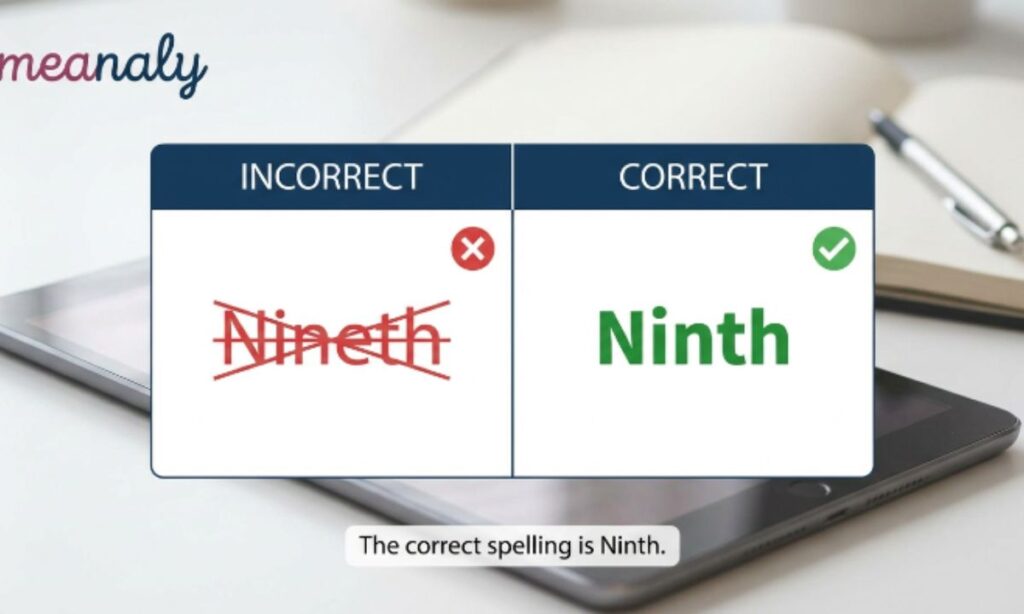
| Feature | Ninth | Nineth |
|---|---|---|
| Correct spelling | ✅ Yes | ❌ No |
| Found in dictionaries | ✅ Yes | ❌ No |
| Used in British English | ✅ Yes | ❌ No |
| Used in American English | ✅ Yes | ❌ No |
| Common typing/logic error | — | ✅ Yes |
Last Words
The rule here is short and permanent: it’s always “ninth,” never “nineth.” English quietly drops the “e” from “nine” before adding “-th,” and that pattern doesn’t change across regions, formality, or context.
Once that one detail clicks, you’ll write it correctly every time : on forms, in dates, and anywhere else the number nine needs its ordinal form.
Frequently Asked Questions
What is the correct spelling, nineth or ninth?
“Ninth” is the correct spelling; “nineth” is a common misspelling.
Why is nine spelled ninth and not nineth?
The “e” in “nine” is dropped when forming the ordinal number, making it “ninth” instead of “nineth.”
Is nineth a real word?
No, “nineth” is not a recognized word in English — it’s simply a misspelling of “ninth.”
How do you spell the ordinal number for nine?
The ordinal number for nine is spelled N-I-N-T-H.
What is an easy way to remember ninth spelling?
Remember that “nine” loses its final “e” before adding “-th,” similar to how “true” becomes “truly.”
Is there a difference between nineth and ninth in British and American English?
No, “ninth” is the only correct spelling in both British and American English.
What comes after eighth in ordinal numbers?
Ninth comes after eighth, followed by tenth.

Hi , I’m a language researcher and content writer with 6+ years of experience in word meanings, slang, abbreviations, and internet terminology. He writes clear, accurate, and easy-to-understand articles to help readers quickly find reliable definitions and understand modern language with confidence.