

Some sports memoirs chase highlight reels. Others chase something deeper. The Flying Elephant: Memoirs of an Olympic Champion belongs firmly in the second group.
Written by Soviet volleyball legend Alexander Savin, this book doesn’t open with medal counts or victory speeches. It opens with discipline, doubt, and the quiet grind that shaped one of volleyball’s most decorated careers. Savin himself won a silver medal at the 1976 Montreal Olympics and a gold medal at the 1980 Moscow Olympics while playing for the Soviet Union team.
This guide walks through everything worth knowing about The Flying Elephant Memoirs of an Olympic Champion — who wrote it, what it covers, why the unusual title fits so well, and what lessons still hold up for readers in 2026.
What Is The Flying Elephant: Memoirs of an Olympic Champion?
The Flying Elephant: Memoirs of an Olympic Champion is an autobiographical work by Alexander Savin, one of the most successful volleyball players of the Soviet era.
Rather than centering only on wins, it explores the mindset, sacrifice, and structure behind elite performance.
It blends autobiography with sports history, giving readers a rare look inside Soviet athletics. Unlike a typical sports autobiography, it doesn’t focus only on wins — that distinction is what separates it from most modern athlete memoirs.
The Flying Elephant Memoirs of an Olympic Champion
At its heart, this is a story about carrying expectation while chasing something close to perfection. The title itself hints at that tension, since a flying elephant is powerful yet improbable, and that contradiction becomes a useful lens for understanding the memoir.
Instead of leaning purely on personal glory, the book leans into a shared journey. Savin emphasizes teamwork, coaching, and collective achievement, which sets his memoir apart from typical individual-glory-driven Olympic writing.
The Flying Elephant Memoirs of an Olympic Champion Alexander Savin
Alexander Savin was born on July 1, 1957, and competed for the Soviet Union at both the 1976 Montreal Olympics and the 1980 Moscow Olympics. He won silver in 1976 after playing all five matches, then returned four years later to win gold in Moscow, playing all six matches.
Beyond his playing days, his legacy carries real institutional weight. He is a member of the International Volleyball Hall of Fame and is widely regarded as one of the best middle blockers in the sport’s history.
The Story Behind the Title: Why “The Flying Elephant”?
The nickname wasn’t a marketing gimmick — it described a physical contradiction people saw on the court. His nickname, “The Flying Elephant,” was coined to describe his extraordinary combination of massive size and graceful vertical leaps.
That blend of power and grace becomes the emotional thread running through the entire book. It captures what it looks like when a large, physically imposing athlete still manages to move with precision and lightness under pressure.
Summary of The Flying Elephant Memoirs of an Olympic Champion
The memoir traces Savin’s path from a young multi-sport kid to one of volleyball’s most respected figures. It documents the demanding journey from a young athlete with big dreams to one of volleyball’s most accomplished players, giving readers a detailed account of life inside one of the world’s most successful athletic programs of the twentieth century.
Here’s a quick breakdown of what the book covers:
| Focus Area | What the Memoir Explores |
| Early Life | Multi-sport childhood before committing to volleyball |
| Training | Soviet-era discipline and structured skill-building |
| Olympic Career | 1976 silver and 1980 gold medal journeys |
| Team Culture | Life inside CSKA Moscow and the USSR national team |
| Later Years | Reflections on coaching and mentoring |
Alexander Savin’s Volleyball Career in Detail
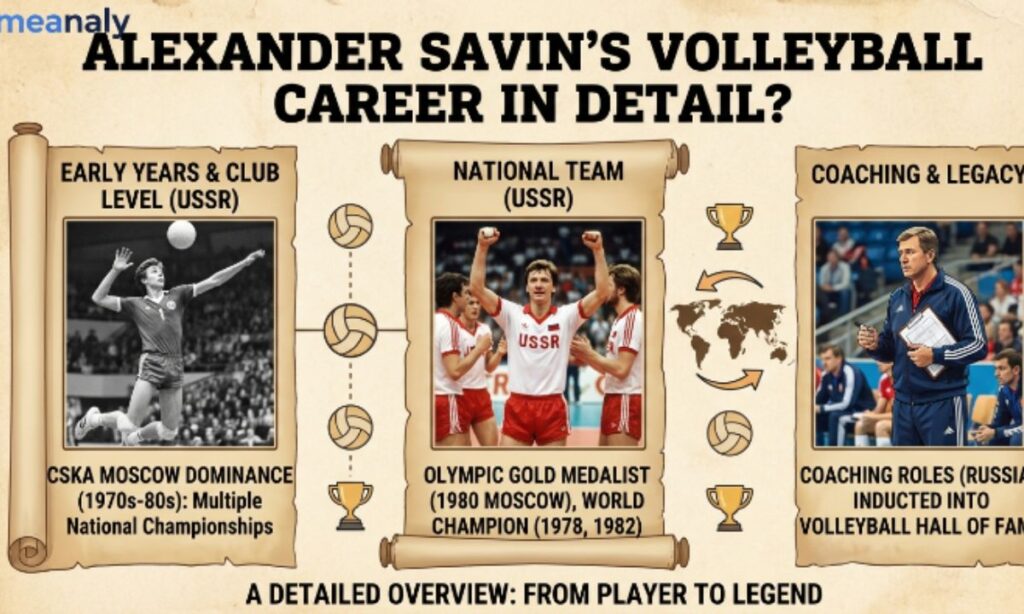
Savin didn’t specialize early, and that’s part of what makes his story stand out. Unlike many elite athletes who specialize at a very young age, he spent his formative years exploring basketball and track and field, and this diverse physical background proved crucial when he finally committed to volleyball at age 14.
His teenage growth spurt brought its own obstacles. Coaches initially struggled to refine his movements, since his long limbs often led to a lack of core stability, though through rigorous, repetitive drills focusing on explosive power, he eventually mastered his center of gravity.
Training Methods That Built an Olympic Champion
The book spends real time on process, not just outcomes. Readers get a firsthand look at how Soviet-era training systems shaped elite performers.
- Structured, repetitive drills built explosive power over time.
- Coordination work from multiple sports carried over into volleyball.
- Team-based training culture reinforced consistency and discipline.
- Long-term development mattered more than early specialization.
Athletes from the Soviet Union trained within one of the world’s most organized sports systems, and the memoir offers readers a firsthand perspective on how these systems operated.
Mental Toughness Lessons from The Flying Elephant Memoirs of an Olympic Champion
Physical training only tells part of the story. The memoir also dives into the psychological weight of competing at the Olympic level. The book presents Savin’s reflections on Olympic pressure, teamwork, and personal sacrifice, making it emotionally engaging for readers interested in sports psychology and authentic athletic storytelling.
Key mental toughness takeaways readers often highlight include:
- Learning to perform under sustained public and institutional pressure.
- Managing doubt without letting it derail preparation.
- Treating setbacks as part of a longer developmental arc.
- Staying grounded within a demanding, high-expectation system.
Teamwork and Leadership in Elite Volleyball
Savin’s story never positions him as a lone star. The themes of resilience, leadership, teamwork, and personal growth appeal to readers well beyond the sports world.
The book treats leadership as something built through consistency, not charisma alone — showing up for teammates, absorbing pressure without passing it downward, and prioritizing collective results over individual spotlight.
The Olympic Environment and Cold War Sports Culture

Soviet athletics during Savin’s era operated inside a highly structured, high-stakes system. The memoir doesn’t shy away from describing that environment honestly, giving readers insight into how national pride, discipline, and institutional expectation shaped everyday training life.
This context matters for readers interested in Olympic history broadly, not just volleyball specifically, since it captures a sports culture very different from today’s more individualized athlete branding.
Coaching Philosophies Featured in The Flying Elephant Memoirs of an Olympic Champion
Coaching runs as a consistent thread throughout the book, both from Savin’s perspective as a player and later as a mentor figure.
The memoir shares raw experiences from the golden era of Soviet volleyball, including insider stories from CSKA Moscow and the USSR national team, along with portraits of forgotten legends.
Historical Value of The Flying Elephant
Beyond personal storytelling, the book functions as a historical record. It includes over 240 rare photographs, capturing training camps, championships, and behind-the-scenes Olympic moments that shaped volleyball history.
For sports historians, that visual archive adds weight the text alone couldn’t provide, documenting an era of volleyball that’s rarely covered in such detail from an insider’s perspective.
Key Lessons Readers Can Learn from The Flying Elephant Memoirs of an Olympic Champion
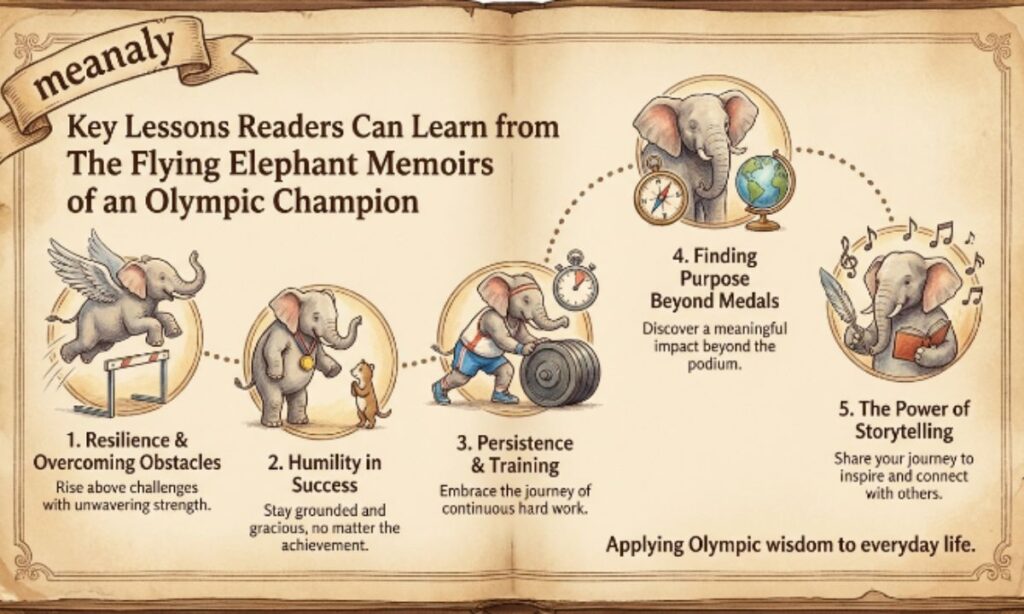
Even outside of sports, the book’s core ideas translate well to other high-performance fields.
- Discipline compounds. Small, repeated efforts build long-term results.
- Team success outweighs individual glory. Shared goals build stronger outcomes.
- Adaptability matters. Diverse early experiences can strengthen specialized skill later.
- Pressure is manageable. Structure and preparation reduce its weight over time.
- Legacy is built, not given. Long careers come from sustained effort, not single moments.
Athletes can learn the importance of disciplined practice, mental toughness, teamwork, adaptability, and lifelong improvement from Savin’s account.
Case Study: How Savin’s Journey Reflects High Performance Principles?
Savin’s path offers a clear real-world example of how sustained excellence actually gets built. His experiences demonstrate that sustained excellence comes from disciplined preparation, resilience, effective coaching, and strong teamwork rather than talent alone.
That framework applies just as easily to business, academics, or any long-term skill-building goal — talent starts the process, but structure and consistency finish it.
How Accurate and Reliable Is The Flying Elephant Memoirs of an Olympic Champion?
Because the account comes directly from Savin himself, it carries a level of authenticity that secondhand sports histories can’t match.
The memoir is written by someone who lived through the events rather than someone writing about it from a distance, offering an accessible way into a genuinely significant chapter of Olympic and volleyball history.
That firsthand perspective is exactly what makes the book valuable to historians, coaches, and general readers alike.
Why The Flying Elephant Remains Relevant in 2026?
Sports culture has changed dramatically since Savin’s playing days, but the foundations he describes haven’t. While rooted in a specific historical era, its lessons continue to resonate because the foundations of achievement have not changed.
Modern athletes, coaches, and even non-athletes chasing long-term goals can still draw practical guidance from a story built on preparation and teamwork rather than shortcuts.
The Flying Elephant and Its Place in Sports Literature
Compared to many modern athlete autobiographies, this memoir takes a notably different approach. Unlike many modern athlete autobiographies that focus heavily on celebrity culture, Savin’s memoir centers on performance, growth, and dedication.
That focus gives it lasting value in sports literature — less about fame, more about the mechanics of building a career that actually lasts.
Frequently Asked Questions
What is Flying Elephant Memoirs about?
It’s Alexander Savin’s autobiographical account of his volleyball career, Olympic journey, and the discipline behind elite performance.
Who wrote The Flying Elephant Memoirs of an Olympic Champion?
Soviet volleyball legend and Olympic champion Alexander Savin wrote the memoir himself.
Why is the book called “The Flying Elephant”?
The nickname describes Savin’s rare combination of large physical size and graceful, powerful vertical leaps on the court.
What medals did Alexander Savin win?
He won silver at the 1976 Montreal Olympics and gold at the 1980 Moscow Olympics with the Soviet Union team.
Is this book only for volleyball fans?
No, its lessons on discipline, teamwork, and mental toughness appeal to a much wider readership beyond sports.
Conclusion
The Flying Elephant: Memoirs of an Olympic Champion isn’t just a record of Alexander Savin’s medals. It’s an honest look at what building sustained excellence actually requires — structure, teamwork, patience, and the willingness to keep showing up long after the spotlight fades.
For readers interested in Olympic history, volleyball, or high-performance thinking in general, this memoir offers something rare: a firsthand account, told with honesty, from someone who lived every page of it.

Hi , I’m a language researcher and content writer with 6+ years of experience in word meanings, slang, abbreviations, and internet terminology. He writes clear, accurate, and easy-to-understand articles to help readers quickly find reliable definitions and understand modern language with confidence.